
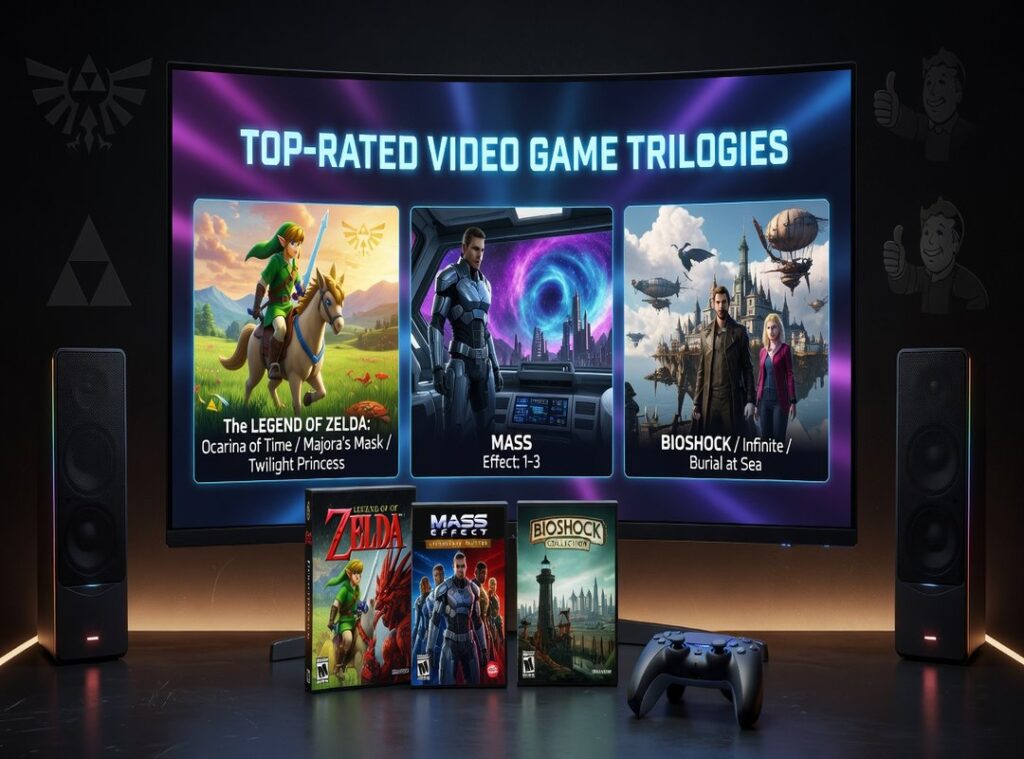
I finished Mass Effect 2 and stared at the screen.
What do I do now?
You know that feeling.
That hollow click in your chest when the credits roll and the world you lived in for sixty hours just… vanishes.
Trilogies fix that.
They give you a beginning, a middle that hurts, and an end that sticks with you.
This isn’t a list of “popular” trilogies. It’s not ranked by sales or nostalgia points. It’s about which ones actually work as stories.
Where every game matters, no filler, no retcons, no cheap sequels pretending to be conclusions.
Some people say The Legend of Zelda is a trilogy. It’s not. Stop it.
Others call Resident Evil a trilogy.
Only the first three count. And even then, only if you ignore the remake mess.
We cut through that noise. You’ll get real trilogies. The kind where skipping one breaks the whole thing.
You’ll walk away with a short, sharp list (no) fluff, no filler, no “honorable mentions.”
Just the ones that earned their place.
And yes, this is the Best Video Game Trilogies of All Time Vrstgamer list. No caveats. No soft launches.
You’ll know which ones to play next.
And why.
Why Trilogies Hit Different
A trilogy isn’t just three games. It’s a promise (one) story, told in three acts, with real stakes and real endings.
Standalone games give you a moment. Long-running series scatter focus. A trilogy?
It builds on itself. Characters change. Worlds evolve.
Mechanics get sharper. You notice the difference between Halo: CE and Halo 3 (not) just better graphics, but tighter pacing, deeper choices.
You want payoff. Not cliffhangers. Not sequels that beg for DLC.
You want to finish Mass Effect 3 and sit there, quiet, because it ends. For real.
That’s why I keep coming back to the Best Video Game Trilogies of All Time Vrstgamer list. It cuts through the noise.
Most trilogies fail at Act III. The good ones earn their final scene.
Do you remember how your favorite trilogy ended? Or just how it made you feel?
Mass Effect Didn’t Just Tell a Story. It Let You Live One
I played Mass Effect in 2007 and never looked at RPGs the same way again. It wasn’t about stats or loot. It was about who Shepard became.
You pick your background. You choose who lives or dies. You decide if the Council survives (and) that choice matters two games later.
That’s not flavor text. That’s real consequence. (Most games fake this.
Mass Effect didn’t.)
Shepard isn’t just you in armor. They’re shaped by every conversation, every loyalty mission, every quiet moment on the Normandy. Garrus cracks jokes while calibrating sniper rifles.
Tali hides her face but never her heart. Liara grows from shy scientist to something far heavier. You care because they feel real.
Not like NPCs, but like people you’d miss.
The Reapers aren’t just villains. They’re ancient, inevitable, and terrifyingly logical. And the ending?
Yeah, it pissed people off (but) it made you argue. With friends. Online.
For years. That’s how deep the investment ran.
This is why Mass Effect still anchors lists like the Best Video Game Trilogies of All Time Vrstgamer. Not because it’s perfect. Because it dared to treat your choices like they mattered (across) three full games.
How many trilogies let you carry a single decision from Eden Prime all the way to Earth’s ruins?
I still remember my first suicide mission.
You do too.
Uncharted: Adventure That Just Works
I played Drake’s Fortune on launch day. It felt like jumping into a summer blockbuster. No waiting.
Exploration. Shooting. Puzzles.
They all snap together cleanly. No filler. No wasted time.
The set pieces? You remember them. Swinging across collapsing bridges.
Escaping sinking ships. Climbing cliffs while gunfire cracks overhead. (Yeah, you’re holding your breath.)
Nathan Drake is messy. He sweats. He stumbles.
He cracks jokes when he’s scared. That’s why he sticks with you.
Elena Fisher keeps him honest. Sully talks him down. Chloe?
She makes him question everything. These aren’t sidekicks. They’re anchors.
Among Thieves doubled the scale. Drake’s Deception went global. Istanbul, Borneo, the Himalayas.
Each game raised the bar without losing its voice.
You don’t need a guide to enjoy it (but) if you keep dying at the same turret section, maybe check out the 7 Common Mistakes Players Do Vrstgamer.
It’s not perfect. Some puzzles are guesswork. Some AI feels dated.
But the pacing? Unmatched.
This trilogy still defines what a great action-adventure feels like.
No cutscenes you skip. No guns you forget existed. No story beats that land flat.
That’s why it’s in the conversation for Best Video Game Trilogies of All Time Vrstgamer.
You know it. You’ve seen the clips. Now go play it.
Again.
Bioshock Breaks Your Brain (Then Hands You a Wrench)
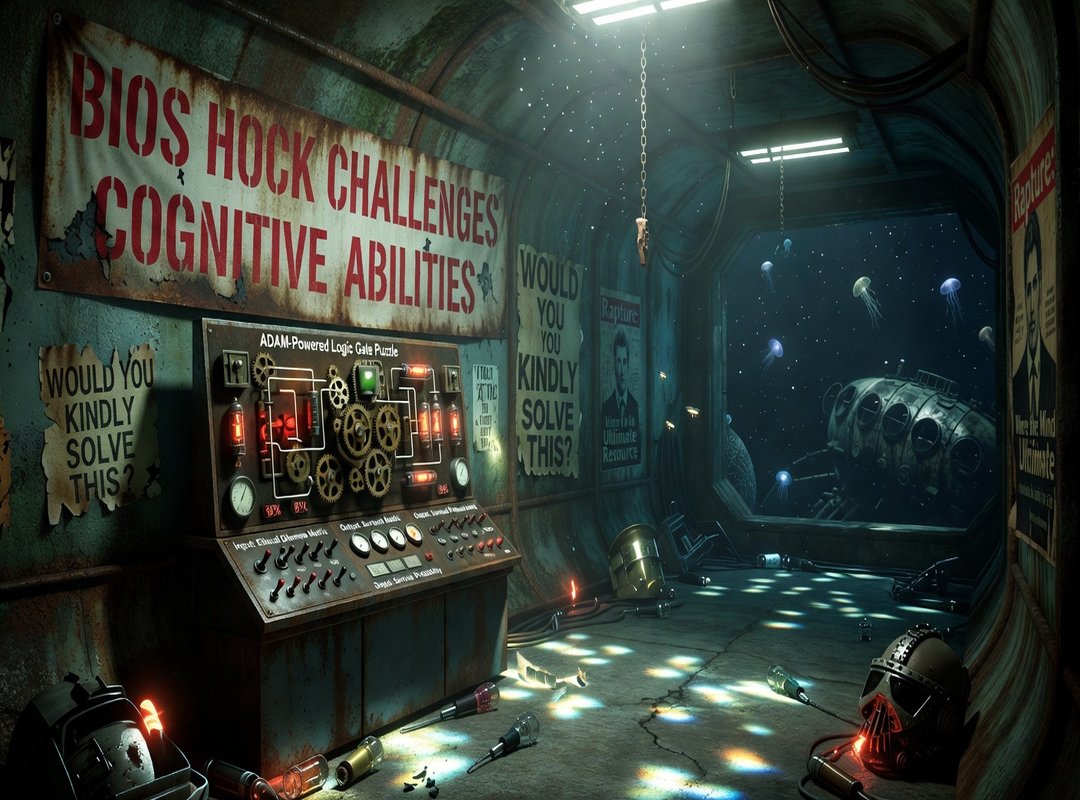
I played BioShock in 2007 and stared at the screen for ten minutes after the first big twist.
You will too.
Rapture is a drowned capitalist wet dream. Columbia is a floating white supremacist fever dream. Both are real places you walk through (not) backdrops.
I ran from Big Daddies while listening to splicers whisper about Atlas.
You’ll hear that voice in your head long after you quit playing.
The plasmids let you shoot fire or summon bees. They’re fun. But they’re also plot devices (literal) manifestations of ideology gone mad.
BioShock 2 made me care about a little sister more than most games make me care about their main character.
Infinite’s ending? I rewound it three times just to hear the words again.
No cutscenes explain everything.
You piece it together from audio diaries, graffiti, and how the walls breathe.
This isn’t just world-building.
It’s world-judging.
People call it one of the Best Video Game Trilogies of All Time Vrstgamer (and) yeah, I agree. Not because it’s perfect. Because it asks things.
Like: What do you owe a person who saved your life? Or: What if freedom is just another kind of cage?
(Also, that lighthouse door opening? Still gives me chills.)
How I Picked My Next Obsession
I played Mass Effect straight through in 2012. No skipping cutscenes. No rushing the Citadel side quests.
I waited three years for the next game.
That patience paid off. It felt like watching friends grow up.
The Last of Us hit different. Quieter, heavier. I cried at the end of Part II.
Then I played it again six months later.
You want sci-fi? Go Mass Effect. You want raw human stakes? The Last of Us.
You want wild adventure with real consequences? Uncharted.
Don’t just try Game One and bail.
Trilogies aren’t playlists. They’re commitments. The payoff hides in the third act.
Remasters fix jank. Collections bundle extras. Skip the original PS3 version of Uncharted (grab) the Legacy of Thieves collection instead.
You already know which one you’ll love. You just haven’t pressed start yet.
Looking for a ranked list? Check out the Best Video Game Trilogies of All Time Vrstgamer breakdown over at Vrstgamer.
Your Next Great Story Starts Now
I’ve played every trilogy on that list. Some made me stay up too late. Others made me restart just to feel it again.
You want that rush. That feeling where the world fades and only the game matters. You’re tired of half-baked stories and empty open worlds.
This is why Best Video Game Trilogies of All Time Vrstgamer exists. Not for hype. Not for clout.
For the real thing. Three games that finish what they start.
So stop scrolling. Pick one. Start today.
Your controller’s waiting. Your next legend isn’t coming to you. You go get it.
 Lirithyn Dusklance writes the kind of competitive gaming content that players end up thinking about long after they close the tab. Not because the writing is overly dramatic or filled with forced “pro gamer” energy, but because Lirithyn has a very sharp understanding of the small decisions that separate average play from genuinely intelligent play. They covers Competitive Play Insights, Gaming Innovations, and Genre Exploration with the mindset of someone who has spent years paying close attention to how games actually function beneath the surface.