
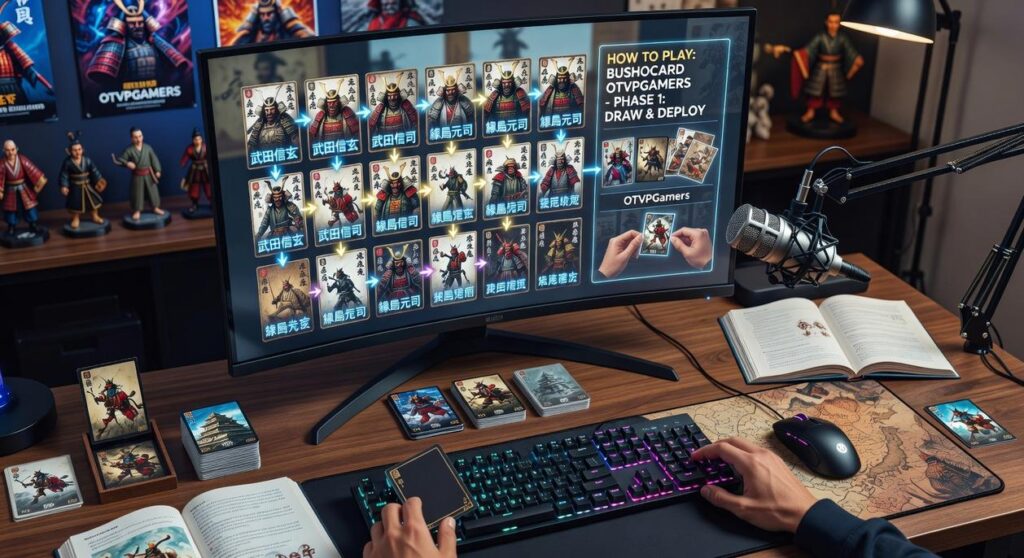
You know the rules of Bushocard but you’re still losing more than you’re winning.
I’ve been there. You build what seems like a solid deck and then watch it fall apart against players who see three moves ahead.
The gap between knowing how to play and actually winning consistently? It’s bigger than most people think.
how to play bushocard otvpgamers breaks down the strategies that separate casual players from the ones who dominate every match. This guide pulls from tactics used by top-tier players who’ve figured out what actually works.
You’ll learn how to build decks that counter what your opponents are doing. How to read the board state and anticipate moves before they happen. How to turn close games into wins instead of watching them slip away.
This isn’t about memorizing more rules. It’s about understanding the game at a level where you start making better decisions automatically.
We’re covering deck construction, positioning strategy, resource management, and the mental game that most players ignore.
By the end, you’ll have actionable steps you can use in your next match. Not theory. Real tactics that change how you play.
The Unwritten Rules: Core Mechanics Deep Dive
You can memorize every card in Bushocard and still lose to someone who understands the fundamentals.
I see it all the time. Players build these elaborate decks with rare cards but don’t grasp the basic mechanics that actually win games.
Some people say individual card power is what matters most. They’ll tell you to chase the strongest cards and you’ll dominate. And sure, powerful cards help.
But they’re missing the bigger picture.
Resource Management is Key
Card advantage is simple. It means having more options than your opponent.
When you draw two cards and your opponent draws one, you’re ahead. When you trade one of your cards to remove two of theirs, you’re winning.
I recommend tracking this mentally every turn. Ask yourself: am I up cards or down cards? Because the player with more resources usually controls how the game ends.
Understanding Tempo
Tempo is about timing and pressure.
It’s when you force your opponent to react instead of building their strategy. You play a threat, they have to answer it. That’s tempo.
Here’s what I tell people learning how to play bushocard otvpgamers. Play aggressively when you have the board advantage. Make them scramble. But if you’re behind, slow things down and disrupt their rhythm.
The First Three Turns
Your opening moves set everything up.
Turn one and two should establish your core engine. Don’t waste early plays on flashy moves that don’t build toward your win condition.
By turn three, you should know what deck type you’re facing. Watch what they play and adjust accordingly.
Building a Winning Deck: Synergy and Archetypes
Most deck building guides will tell you to pick an archetype first.
Aggro, Control, or Combo. Then build around it.
But I think that’s backwards.
Here’s why. When you start with a rigid archetype in mind, you force cards into roles they weren’t meant to play. You end up with a deck that looks right on paper but falls apart in actual games.
I’ve seen it happen over and over with how to play bushocard otvpgamers. Players copy pro decks card for card, then wonder why they’re losing.
The truth? Synergy matters more than archetype.
Let me break down what actually works.
The Three Core Archetypes
Yeah, you need to know these. But don’t let them box you in.
Aggro decks win fast. You’re looking to close games by turn 5 or 6 with cheap creatures and direct damage. Think of it as overwhelming your opponent before they can set up.
Control decks play the long game. You answer threats, remove creatures, and win once your opponent runs out of options. These decks need answers for everything.
Combo decks rely on specific card interactions to win. You’re assembling pieces that create an unstoppable play when combined.
But here’s the contrarian part. The best decks I’ve built blur these lines. A control deck with an aggro finish. An aggro deck with combo elements.
Finding Real Synergy
Forget about jamming the strongest individual cards together.
Look for cards that multiply each other’s value. In minecraft otvpgamers, this means finding 2-3 card combinations that create situations your opponent can’t handle.
Take a simple example. A card that draws you two cards when a creature dies. Pair it with cheap creatures you can sacrifice. Suddenly you’re drawing four cards while your opponent draws one.
That’s synergy.
Or consider a creature that gets stronger for each spell you cast. Combine it with cheap spells and you’ve got a growing threat that also controls the board.
The key is asking yourself: does this card make my other cards better?
Tech Cards That Actually Work
People overthink this part.
Tech cards are your answers to whatever everyone else is playing. But most players make the same mistake. They add too many and dilute their deck’s main plan.
I keep it simple. Pick 3-4 flexible cards that handle multiple problems. A removal spell that works on creatures and artifacts. A counterspell that also draws you a card.
The goal isn’t to beat everything. It’s to not lose to the most common strategies while keeping your deck focused.
The Resource Curve Reality
This is where most decks fail.
You need cheap cards to play early. You need expensive cards to win late. But the ratio matters way more than guides admit.
Here’s what works for me:
- Start with 8-10 cards that cost 1-2 resources
- Add 12-15 cards in the 3-4 range
- Include 4-6 expensive finishers
- Fill the rest with lands or resource cards
Test it. If you’re stuck with expensive cards in hand early, add more cheap options. If you run out of gas late, add card draw or bigger threats.
Your curve should match your deck’s speed. Aggro wants more cheap cards. Control wants more expensive ones. But both need balance.
Mid-Game Mastery: How to Control the Board

The mid-game is where I used to lose constantly.
I’d build a decent opening. Get some cards on the board. Feel pretty good about myself.
Then everything would fall apart around turn five or six.
For months I couldn’t figure out what I was doing wrong. I knew how to play bushocard otvpgamers but I kept getting crushed by players who seemed to read my every move.
Here’s what I learned the hard way.
Reading Your Opponent’s Hand
Watch the pauses. When someone hovers over a card but doesn’t play it, they’re considering options. That tells you they have removal or a counter in hand.
I used to ignore these signals completely (big mistake). Now I track every hesitation.
If your opponent passes on an obvious play, they’re either holding something better or waiting for a specific threat. The current meta matters here too. If everyone’s running the same three removal spells, you can narrow down what they’re saving.
Strategic Trading
This one cost me SO many games.
I’d refuse to trade my three-cost minion for their two-cost just because the math felt wrong. But sometimes you NEED to make that trade to survive.
Think about your win condition. If you’re planning to close the game with a big finisher on turn eight, losing a bit of value on turn four doesn’t matter. You just need to stay alive.
Some people say never trade down. They’re wrong. Protecting your life total or preventing your opponent from snowballing is worth more than perfect value trades.
Baiting and Bluffing
Here’s a trick that changed my game.
Play your second-best threat first. Let them waste their premium removal on it.
I learned this after watching my best cards get answered over and over. Now I bait out their responses before committing my real win conditions.
Drop something threatening but replaceable. Make them think it’s your main plan. When they use their hard removal, you’ve cleared the path.
Pivoting Your Strategy
You need a backup plan. Always.
I used to stubbornly stick to my opening strategy even when the draws weren’t there. I’d wait for cards that never came while my opponent took control.
Now I watch the board state at every turn. If my aggressive plan isn’t working by turn four, I shift to defense and look for a different angle.
Your deck has multiple ways to win. Don’t marry yourself to just one.
The Endgame: Securing the Victory
You’ve made it to the late game.
Both life totals are low. Your hand has three cards. Your opponent just drew for their turn and you can see them calculating something.
This is where games get won or lost.
Most players I watch make the same mistake here. They play defensively when they should be closing out the game. Or they go all-in when one more turn would guarantee the win.
The endgame isn’t about having the best cards. It’s about knowing your exact path to victory and protecting it.
Know Your Win Condition
Every deck wins differently. Some decks need specific card combinations. Others just need to keep their opponent from playing anything meaningful.
Figure out what has to happen for you to win this specific game. Not in theory. Right now.
Maybe you need your opponent at 15 life to play your finisher. Maybe you need them to tap out completely. Write that number down mentally and protect every card that gets you there.
When you’re learning how to play bushocard otvpgamers, this becomes second nature. You start seeing two or three turns ahead instead of just reacting.
Playing Around Their Outs
Your opponent has outs. Cards that can flip the game even when they’re behind.
The best players know what those cards are before the match even starts. They’ve seen the popular decks enough times to memorize the threats (and honestly, you should too).
Don’t give them the perfect setup. If their deck runs a board wipe that needs four creatures, keep three on the field. If they need you to attack to trigger their counter, make them come to you.
Starving Them Out
Sometimes the best way to win is to make sure they can’t.
Resource denial in the late game looks different than early game. You’re not trying to stop everything. You’re cutting off the one thing they need to come back.
Force them to discard their last card. Destroy the land type their finisher needs. Counter the draw spell that would refill their hand.
It feels mean. But you know what feels worse? Losing when you were ahead.
The All-In Moment
Here’s the part most players mess up.
They either commit too early and get blown out. Or they wait too long and let their opponent draw the answer.
You go all-in when two things are true. First, you can win right now if they don’t have an answer. Second, waiting another turn doesn’t actually improve your position.
Check out these video game tips otvpgamers for more on timing your final push.
Count their mana. Count their cards. If they’re tapped out with an empty hand, that’s your window.
Don’t overthink it. Just close.
Your Path to Bushocard Dominance
I’m going to tell you what most players miss.
They think Bushocard is about collecting the best cards. It’s not.
You win by understanding tempo. You win by building synergy. You win by reading your opponent better than they read you.
I’ve watched thousands of matches. The pattern is clear. Elite players don’t just know their deck. They know when to push and when to hold back.
You came here to get better at how to play bushocard otvpgamers. Now you have the framework that actually works.
Deck building matters. Mid-game control matters. Endgame execution matters. When you apply these principles together, your win rate will climb.
Here’s what you do next: Build your deck with these concepts in mind. Refine it after every match. Practice these tactics until they become instinct.
The gap between where you are and where you want to be isn’t about luck. It’s about applying what you now know.
Your next match is where mastery begins.
 pancake776 has opinions about gaming culture. Strong ones, usually backed by actual experience instead of detached commentary from the sidelines. They covers Game Development Practices, Gamer Lifestyle Essentials, and Gaming Innovations with a perspective that feels unusually grounded compared to much of modern gaming media. pancake776 seems genuinely interested in the relationship between players and games — not just what people are playing, but why certain systems, communities, and experiences continue to matter over time.