

You’ve been stuck at the same rank for weeks now.
You watch guides. You practice your aim. You study the meta. But something isn’t clicking and you can’t figure out what’s holding you back.
I see this all the time. Most gaming advice online either rehashes the same basic tips or dives so deep into one specific game that it doesn’t help you anywhere else.
OTVPGamers video game advice by OnThisVerySpot cuts through that noise.
I’ve spent years analyzing what actually separates players who plateau from those who keep climbing. Not just in one game but across FPS, MOBA, RTS, and everything in between.
The patterns are there. The principles that make you better exist across all competitive games.
This guide gives you those principles. The ones that work whether you’re playing Valorant or League or StarCraft.
No outdated strategies. No game-specific tricks that only apply to one patch. Just the core fundamentals that pros use without even thinking about them anymore.
You’re here because you want to actually improve. Not just read about improvement.
That’s what this is. A direct path from where you are now to where you want to be.
Mastering the Fundamentals: The Unseen Skills of Elite Players
You’ve seen them in your ranked games.
Players who don’t seem to move faster than you. Their APM isn’t off the charts. But somehow they’re always one step ahead.
Here’s what nobody tells you about getting good.
It’s not about clicking faster. It’s about clicking smarter.
Most gaming content focuses on flashy plays and highlight reels. But I’ve noticed something after watching thousands of hours of competitive gameplay. The gap between average and elite players isn’t mechanical speed.
It’s the stuff nobody talks about.
Beyond APM: Why Speed Doesn’t Matter
Actions Per Minute is basically a lie.
I know that sounds harsh. But spamming commands to inflate your APM number does nothing for your win rate. What matters is eAPM (that’s Effective Actions Per Minute). Every input should have a purpose.
Watch a pro player’s hands. They’re not constantly moving. They’re still until the exact moment an action matters.
The Mini-Map Is Your Second Screen
You glance at the mini-map. Pros read it like a book.
There’s a difference. Glancing means you check it when you remember. Reading means you’re processing information constantly without breaking focus on your main screen.
I practice this with a simple drill. Every three seconds, I force myself to absorb one piece of information from the mini-map. Where’s my team? Where was the enemy last seen? What objectives are up?
After a week, it becomes automatic. You start predicting ganks before they happen.
Weaponizing Sound
Your headset might be the most underused tool in your setup.
Audio cues tell you everything. Footsteps reveal positions. Ability sounds tell you what’s on cooldown. Reload animations mean someone’s vulnerable for exactly 2.3 seconds (depending on the game).
But here’s what most otvpgamers video game advice by onthisveryspot misses. You need to train your ear the same way you train your aim.
I spent a month in custom games with my eyes closed. Just listening. Identifying sounds. Measuring distances based on audio alone.
Sounds weird. Works incredibly well.
Crosshair Placement: The Foundation of Aiming
This one’s simple but most players ignore it.
Keep your crosshair at head level. Always. Pre-aim common angles before you peek them.
Why does this matter? Because reaction time isn’t about how fast you can move your mouse. It’s about how little you need to move it.
If your crosshair is already on the angle where enemies appear, you just click. No flick required. No adjustment needed.
Here’s the drill I use:
- Load into an empty map
- Walk through common routes
- Keep crosshair exactly where heads appear
- Do this until it feels wrong to aim anywhere else
Takes about 20 minutes a day for two weeks. After that, you’ll notice you’re winning duels you used to lose.
Not because you got faster. Because you removed the need for speed entirely.
The Mental Game: How to Think, Adapt, and Win Under Pressure
You know that feeling when you’re up 2-0 and then everything falls apart?
Your mechanics are still there. Your aim didn’t suddenly get worse. But somehow you lose three rounds in a row and can’t figure out what happened.
It’s not your hands. It’s your head.
I see this all the time. Players grind mechanics for hours but spend zero time working on the mental side. Then they wonder why they can’t close out games or why they tilt after one bad play.
Here’s what actually works.
Implementing VOD Review That Works
Don’t just watch your highlights. That’s what everyone does and it teaches you nothing.
Pull up a loss. A bad one. Watch the first death and ask yourself why you were standing there in the first place. Was your positioning off? Did you peek when you should’ve held? Were you even tracking enemy cooldowns?
Write it down. One mistake per round. That’s it.
Most players try to fix everything at once and end up fixing nothing. Pick one pattern (like overextending or bad crosshair placement) and focus on that for your next five games.
The OODA Loop in Gaming
This comes from fighter pilot training but it works perfectly for competitive gaming.
Observe what’s happening. Orient yourself to the situation. Decide on an action. Act on it.
The player who cycles through this loop faster wins the fight. When you’re stuck reacting, you’re already behind. You need to process information and make calls before your opponent does.
Here’s the practical part. In between rounds, ask yourself what information you gathered. Did you see their team comp? Do you know who used their ultimate? What utility is still up?
That’s observation turning into orientation. Now you can decide and act faster than someone who’s just winging it.
Tilt Control and Mental Resets
Tilt loses more games than bad mechanics. I’ll say it again because it’s true.
You make one mistake and suddenly you’re playing angry. You take dumb fights. You stop communicating. Your whole game falls apart.
Try this. After a bad play, take three deep breaths before the next round. Sounds simple but most players don’t even do that. They jump right back in while their brain is still screaming about what just happened.
Second thing. Have a physical reset. Shake out your hands. Roll your shoulders. Something that breaks the mental loop.
Third. Say one thing out loud that you’re going to focus on next round. Just one. “I’m holding this angle” or “I’m playing for info.” It refocuses your brain on the next play instead of the last one.
Predictive vs. Reactive Play
Stop just reacting to what’s on your screen.
The best players at otvpgamers aren’t faster. They’re smarter. They know when the enemy Reyna has her dismiss up. They track ultimate timings without even thinking about it.
Start counting. When you see an ability used, make a mental note (or better yet, call it out). Now you know they don’t have it for the next 30 seconds or whatever the cooldown is.
That’s predictive play. You’re not guessing. You’re working with information.
When you know their main duelist just used dash, you can challenge them. When you know their controller is low on utility, you can push. You’re making decisions based on what you know will happen, not just reacting to what already did.
Pro tip: Record your comms for one game and listen back. You’ll hear how often you’re calling out what already happened versus what’s about to happen. The ratio should flip.
Your mechanics will only take you so far. The mental game is what separates players who peak at one rank from players who keep climbing.
Optimizing Your Setup: Gear and Settings That Actually Matter
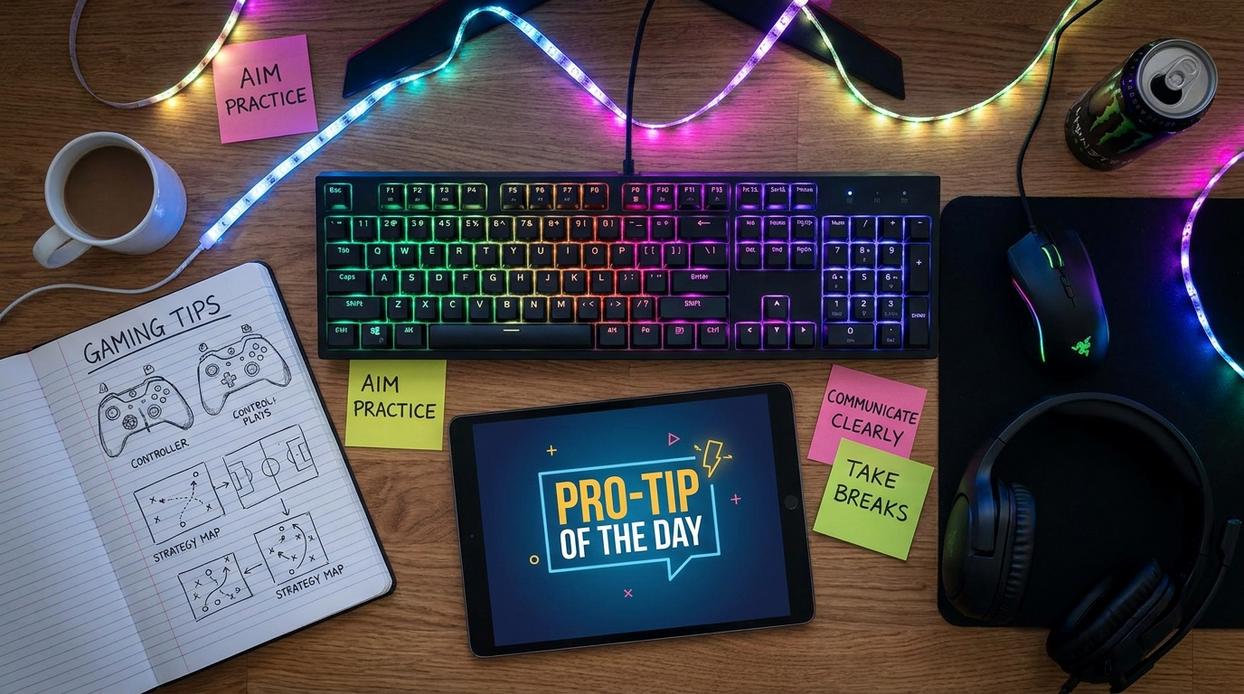
You’ve probably heard someone say their sensitivity is 800 DPI at 2.5 in-game.
And you tried it. Felt terrible.
That’s because there’s no magic number that works for everyone. Your arm length, desk space, and how you naturally move your mouse all play into what feels right.
I’m going to show you what actually matters when setting up your gaming rig. Not the stuff streamers sell you on. The things that make a real difference in how you play.
Finding Your Perfect Sensitivity
The PSA Method works like this. Pick a point on your mousepad (usually center). Swipe to the edge. Adjust your sensitivity until that swipe turns your character exactly 180 degrees.
Now you can flick behind you with muscle memory.
Some players need lower sensitivity for precision aiming. Others want to spin faster. The key is consistency. Once you find your sweet spot, stick with it for at least two weeks before changing anything.
Your brain needs time to build that muscle memory.
Why Refresh Rate Beats Resolution
Here’s what nobody tells you about monitors.
A 60Hz display shows you 60 frames per second. A 144Hz monitor shows 144. That’s more than double the visual information hitting your eyes every second.
When someone peeks a corner, you see them 84 frames earlier on a 144Hz screen. That’s the difference between reacting first and respecting the killcam.
I’ve tested both setups. The jump from 60Hz to 144Hz is night and day. Going from 144Hz to 240Hz? You’ll notice it, but it’s not as dramatic.
Resolution looks pretty. Refresh rate wins games. For more helpful strategies, check out these video game tips otvpgamers has put together.
Keybinds That Actually Work
Stop clicking your abilities with your mouse.
Every time you click an ability icon, you’re not aiming. That’s a problem when someone’s shooting at you.
Put your most-used abilities on keys your fingers rest on naturally. For most people, that’s Q, E, R, and F. Your ultimate ability? I like Z or X because they’re easy to hit but hard to fat-finger by accident.
The goal is simple. Keep your fingers close to WASD so you never stop moving while using abilities.
Clean Up Your Screen
Your UI should show you what you need and hide everything else.
I see players with health bars, damage numbers, quest trackers, and chat boxes covering half their screen. Then they wonder why they didn’t see that enemy flanking.
Start by turning off anything you don’t check during fights. Move your minimap closer to your crosshair so you can glance at it without looking away from the action (most games let you resize and reposition it).
Your eyes should spend 90% of their time on the center of your screen where enemies appear.
The rest is just noise.
Advanced Concepts: Understanding the ‘Meta’ and When to Break It
You’ve got the basics down.
You know your role. You understand your champion or character. You’re hitting your shots.
But you keep losing to players who seem to know something you don’t.
Here’s what’s happening. They’re playing a different game. While you’re focused on mechanics, they’re managing resources you didn’t even know existed.
Some players will tell you to ignore the meta completely. They say it kills creativity and turns everyone into robots running the same strategies. Just play what feels good and you’ll figure it out.
I hear this all the time.
But here’s the problem with that advice. The meta exists for a reason. It’s literally the most effective tactics available right now. Ignoring it means you’re choosing to play at a disadvantage.
What you actually need is something different.
Resource Management Beyond the Obvious
Every game gives you resources to manage. Mana in MOBAs. Economy in strategy games. Cooldowns in shooters.
But most players only think about their own resources.
I want you to think about trading instead. When you use your ultimate ability to force the enemy to burn two of theirs, you just won a trade. When you spend 1500 gold to deny them 3000, that’s a winning exchange.
Here’s how to start:
• Track what you spend and what you force them to spend
• Ask yourself if the trade was worth it
• Look for patterns in how opponents use their resources
The best players I know treat everything like currency (including their own health bar).
Information as Your Secret Weapon
You know what separates good players from great ones?
Information.
In any competitive game, knowing where your opponents are is worth more than gold. Vision in League of Legends. Map control in Valorant. Scouting in StarCraft.
But it’s not just about gathering intel. It’s about denying it.
When you control vision, you control the game. Your team knows where to push. Where it’s safe. Where the enemy is setting up. Meanwhile, your opponents are playing blind.
Pro tip: Spend resources on information gathering even when it feels like a waste. That ward you placed might save your life three minutes from now.
Win Conditions Change Everything
Every match has a win condition.
Maybe your team scales better late game. Maybe you need to end before 25 minutes. Maybe your entire strategy revolves around catching their carry out of position.
I see players mechanically outplay their opponents all game and still lose. Why? They didn’t play towards their win condition.
If you’re running a late game composition in a MOBA, fighting at 15 minutes is usually wrong. Even if you think you can win the fight. You’re risking your actual path to victory for a short term gain.
Ask yourself these questions:
• What does my team need to do to win?
• What’s stopping us from doing that?
• What is the enemy team trying to do?
Once you know the answers, your decisions get clearer.
The Meta Game
Now we get to the interesting part.
The meta isn’t some mysterious force. It’s just what works best right now based on patches, player skill, and common strategies. You need to understand it before you can break it.
I spent months studying the meta in different games. What I found is that most players follow it blindly. They see a pro use a strategy and copy it without understanding why it works.
That’s your opportunity.
Learn the meta inside and out. Master it. Then look for its weaknesses. Every dominant strategy has counters that people forget about because they’re too busy running the popular build.
When everyone expects the same three strategies, showing up with a fourth that specifically beats those three? That’s how you climb.
The minecraft tutorial otvpgamers community figured this out years ago. Players who understood base building meta could predict exactly how opponents would attack, then build specifically to counter those approaches.
Counter-meta play isn’t about being different for the sake of it. It’s about recognizing patterns and exploiting them.
Start with one concept. Maybe it’s tracking resource trades this week. Next week, focus on information control. Build these skills one at a time and you’ll start seeing the game differently.
From Player to Competitor
You now have a clear roadmap to tangible improvement.
Mindset, fundamentals, and strategy. These are the pillars of expert play.
The feeling of being stuck is beatable. The solution isn’t just grinding more but practicing smarter with a focused approach.
Here’s why this works: These otvpgamers video game advice by onthisveryspot tips are universal principles, not temporary tricks. Mastering them builds a foundation for continuous improvement in any game you play.
Pick one concept from this guide. Maybe VOD review or crosshair placement.
Dedicate your next gaming session to mastering it.
True progress starts with a single, intentional step.
 pancake776 has opinions about gaming culture. Strong ones, usually backed by actual experience instead of detached commentary from the sidelines. They covers Game Development Practices, Gamer Lifestyle Essentials, and Gaming Innovations with a perspective that feels unusually grounded compared to much of modern gaming media. pancake776 seems genuinely interested in the relationship between players and games — not just what people are playing, but why certain systems, communities, and experiences continue to matter over time.