
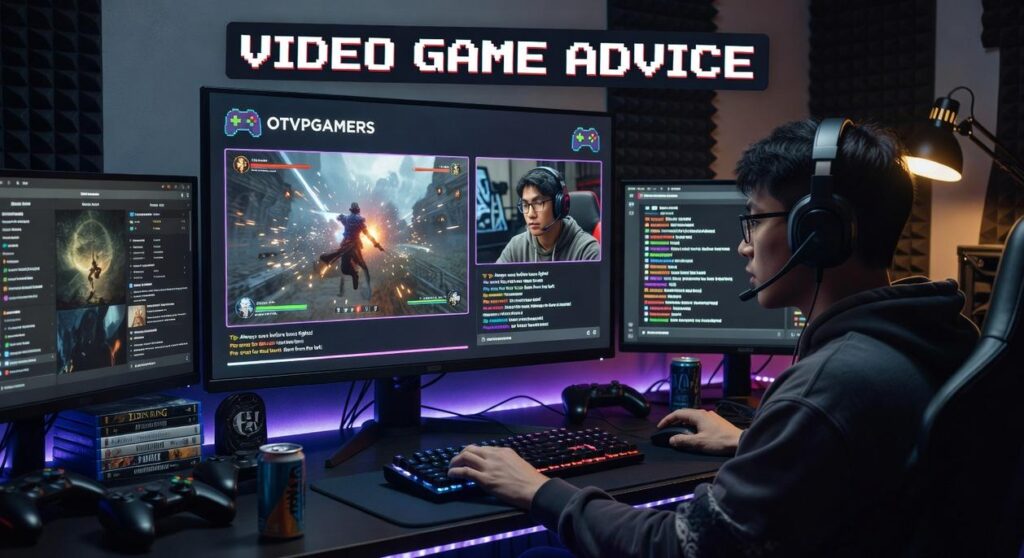
I’ve spent years watching players grind for hours without getting better.
You’re probably here because you’re stuck. You play constantly but your rank stays the same. You watch pros and wonder what they’re doing that you’re not.
Here’s the truth: time doesn’t equal improvement. I’ve seen players with half your hours climb twice as fast because they understand something you don’t.
Video game advice otvpgamers breaks down what actually separates good players from great ones. Not the flashy stuff. The fundamentals that matter.
I analyzed how top competitive players approach games. Not just what they do, but how they think. The patterns they recognize that you’re missing.
This article gives you a framework that works across any game you play. We’re talking mindset shifts, mechanical habits, and strategic thinking that translates whether you’re playing shooters or strategy games.
No fluff about “just practice more.” You’ll get specific changes you can make today that will show up in your gameplay tomorrow.
Let’s fix what’s holding you back.
The Foundation: Mastering the Mental Game Like a Pro
You can have perfect aim and still lose.
I’ve watched players with insane mechanics completely fall apart when the pressure hits. They miss callouts. They peek at the wrong time. They tilt off the face of the earth after one bad round.
Here’s my take. Your mindset is what separates good players from great ones. Not your flick shots. Not your crosshair placement (though those matter too).
The real difference shows up when you’re down 10-12 and your teammate just whiffed an easy kill.
Why VOD Reviews Actually Matter
Most players skip this part. They’d rather queue up for another match than watch themselves make mistakes.
But if you want to climb, you need to watch your own gameplay. I’m talking about sitting down with your replays and actually studying what went wrong.
Look for the patterns. Did you overpeek the same angle three times? Did you waste your utility early every round? Were you always the first one dead because you pushed without info?
These aren’t mechanical issues. They’re decision-making problems. And you can’t fix what you don’t see.
When I review my own games, I focus on unforced errors. The plays where nobody pressured me but I still made the wrong call. That’s where the real learning happens.
The 10-Second Reset
Here’s something I learned the hard way. One bad play doesn’t have to ruin your whole game.
You died to a stupid peek. Fine. You’ve got 10 seconds to let it go.
Take a breath. Shake it out. Then focus on the next round like the last one never happened. Because honestly, it doesn’t matter anymore. You can’t change it.
I know players who let one mistake destroy their entire mental state. They start playing angry. They make desperate plays. They blame their team. And suddenly they’ve lost four rounds in a row.
Don’t be that player.
The best advice I got from video game advice otvpgamers was simple. Treat each round like it’s 0-0. Your scoreboard doesn’t define the next play. Your decisions do.
Losses Are Just Data
I used to hate losing. Like, actually get mad about it.
Now? I see every loss as information. What did I learn? Where did my strategy break down? What would I do differently next time?
This isn’t some feel-good mindset trick. It’s practical. If you’re not learning from your losses, you’re just repeating the same mistakes over and over.
The players who improve fastest are the ones who treat ranked like a lab. They test things. They fail. They adjust. They get better.
That’s the otvpgamers approach. Not chasing wins for your ego. Building skills that last.
Universal Mechanics: Skills That Transcend Any Single Game
You know what separates good players from great ones?
It’s not the game they play.
I’ve watched people dominate in League of Legends, then switch to Valorant and climb ranks in weeks. Meanwhile, others grind thousands of hours in one game and barely improve.
The difference? They understand mechanics that work everywhere.
Some players think every game is completely different. They say you can’t transfer skills from an RTS to an FPS. That each game requires starting from scratch.
But that’s missing the point.
Sure, the buttons change. The maps are different. But the underlying principles? Those stay the same.
Let me break down what actually matters.
Information Discipline
This is about what you pay attention to.
Your screen is full of stuff. Minimap updates. Cooldown timers. Audio cues telling you someone’s flanking. Health bars. Ammo counts.
Most players see it all but process none of it.
Great players filter. They know what matters right now and what can wait. In Dota 2, that means glancing at the minimap every few seconds (not staring at it). In Call of Duty, it’s tracking enemy spawn timers while you’re mid-gunfight.
Your brain can’t handle everything at once. So you train it to grab what counts.
APM Efficiency
People obsess over actions per minute like it’s a scorecard.
It’s not about clicking faster. It’s about making every action count.
I’ve seen Starcraft players with 300 APM lose to someone at 150. Why? Because half those clicks were nervous spam. Selecting the same unit five times. Moving the camera for no reason.
Here’s what efficient play looks like:
- Using hotkeys instead of clicking through menus
- Planning your next three actions while executing the current one
- Cutting out repeated commands that don’t change anything
This applies whether you’re playing Overwatch or Age of Empires. Clean inputs beat frantic ones.
Predictive Positioning
Stop reacting to where enemies are.
Start thinking about where they’ll be.
In Counter-Strike, you don’t hold an angle because someone’s there now. You hold it because that’s where they’re coming in ten seconds. In League, you don’t ward the jungle after the gank. You ward before it happens.
This is thinking two steps ahead.
Watch how pro players move in any competitive game. They’re rarely surprised. Not because they have better reflexes (though some do). Because they’ve already predicted the play.
You can learn this. Start asking yourself what the opponent wants to do next. Then position for that reality.
Resource Management
Everything in competitive games is a resource.
Health. Mana. Ammo. Cooldowns. Even your position on the map.
The players who win understand trading resources. They give up something small to gain something bigger.
In Apex Legends, you might burn a shield battery now to secure better position for final circle. In Dota, you trade mana for lane pressure that forces the enemy to use their resources defensively.
Bad players hoard everything until it’s too late. Good players spend resources to create advantages.
Think of it like this. If you use your ultimate ability and get nothing, that’s waste. If you force the enemy to use two abilities to counter it? You’re ahead.
The video game advice otvpgamers focus on comes back to these fundamentals. Different games, same core skills.
Master these mechanics and you’ll climb in whatever you play next.
Strategic Depth: How OTV Experts Deconstruct a ‘Meta’
You know what drives me crazy?
Watching players blindly copy whatever build some streamer used last week. They don’t ask why it works. They just slap it on and wonder why they’re still losing.
I see it all the time. Someone gets destroyed by a specific setup and immediately switches to it. Then they get wrecked again because they don’t understand what made it strong in the first place.
Let me explain what a meta actually is.
It’s the game outside the game. The dominant strategies and character picks that define how everyone’s playing right now. But here’s what most people miss.
The meta isn’t some sacred rulebook you have to follow.
The ‘First Principles’ Approach
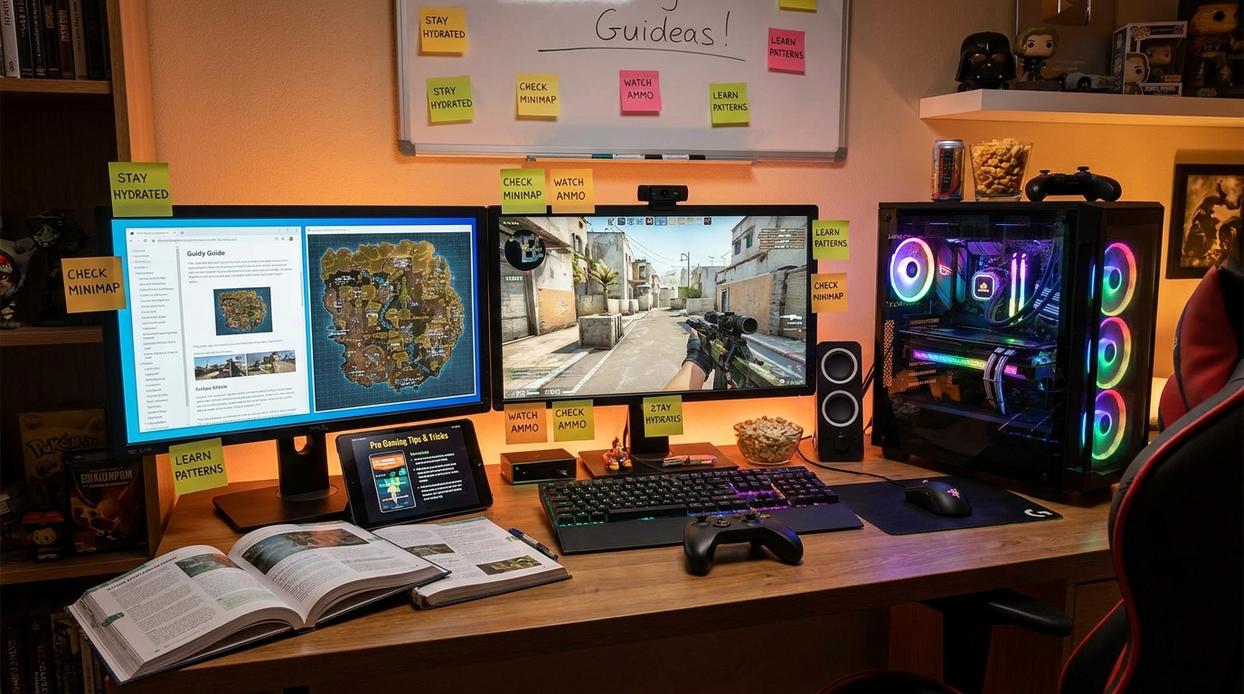
Top players don’t just copy builds. They break them down.
They read patch notes and ask what changed. They test interactions to see what got buffed or nerfed. They look for options everyone else is sleeping on.
That’s the difference. Understanding why something works means you can adapt when it stops working. Or better yet, you can spot the counter before anyone else does.
Think about it like this. If you know a build is strong because of one specific mechanic, you can identify what beats it. You can also find similar mechanics in unexpected places.
The bushocard guide otvpgamers breaks down these concepts in more detail.
Adaptation vs. Mastery
Here’s where it gets tricky.
Should you master one character or learn to flex? Some players say stick with your main no matter what. Others say you need to counter-pick every match.
Both are wrong.
You need a foundation. Something you know inside and out. But you also need to recognize when you’re fighting an uphill battle.
I’ve watched players lose entire tournaments because they refused to adapt. Their main got countered hard and they just kept running it back.
That’s ego talking, not strategy.
Theory-Crafting Your Own Strategies
Want to know the best part about understanding the meta?
You can break it.
Test weird combinations in casual matches. Try setups that sound stupid on paper. Most will fail. But sometimes you find something that works and nobody sees it coming.
That’s how new metas start. Someone experiments with video game advice otvpgamers might call unconventional and suddenly everyone’s scrambling to figure out the counter.
Just don’t theory-craft in ranked. Learn from my mistakes on that one.
Optimizing Your Practice and Setup for Peak Performance
Most players practice wrong.
They queue up game after game hoping they’ll magically improve. But here’s what actually happens. You repeat the same mistakes until they become habits.
I’m going to show you how to practice with purpose and tweak your setup for real gains.
Practice That Actually Works
Stop grinding without a plan. Each session needs a goal.
Spend 15 minutes on aim training. Then jump into three games where you only focus on minimap awareness. That’s it. One thing at a time.
Your brain learns faster this way. Trust me on this.
Settings That Give You an Edge
Your mouse sensitivity matters more than you think. Find your DPI and calculate your eDPI (it’s just DPI times in-game sensitivity). Most pros sit between 200 and 400 eDPI depending on the game.
Keybinds should feel natural. If you’re stretching your fingers to hit an ability, you’re doing it wrong.
Video settings? Turn off the pretty stuff. You want frames, not eye candy. Cap shadows at low and push that frame rate as high as your monitor can handle.
For minecraft otvpgamers, these tweaks can mean the difference between smooth building and choppy gameplay.
Your Body Matters Too
Sit up straight. I know it sounds like something your mom would say, but slouching for hours wrecks your back and kills your reaction time.
Get a chair that supports your lower back. Position your monitor at eye level so you’re not craning your neck down.
These small changes keep you sharp during long sessions. You can’t perform when your shoulders are screaming at you.
From Knowledge to Action
You now have the framework that otvpgamers use to break through plateaus and climb ranks.
We covered mindset shifts, the mechanics that matter, and how to think strategically about your games.
Here’s the thing: playing more won’t fix your plateau. Playing smarter will.
These principles give you a roadmap. But a roadmap only works if you follow it.
Don’t try to change everything at once. That’s how you burn out and quit.
Pick one area from this guide. Maybe it’s VOD reviews or purposeful practice sessions. Commit the next week to that single focus.
Master one thing before you move to the next.
That’s your first step toward the rank you’ve been chasing. The rest will follow once you prove to yourself that intentional practice actually works.
Your next game starts now.
 pancake776 has opinions about gaming culture. Strong ones, usually backed by actual experience instead of detached commentary from the sidelines. They covers Game Development Practices, Gamer Lifestyle Essentials, and Gaming Innovations with a perspective that feels unusually grounded compared to much of modern gaming media. pancake776 seems genuinely interested in the relationship between players and games — not just what people are playing, but why certain systems, communities, and experiences continue to matter over time.